Court dimensions
Pickleball Court Dimensions: The Official Numbers
Every regulation pickleball court, from a backyard build to a tournament venue, uses the exact same geometry, set by USA Pickleball. Here's every measurement, to scale, in one diagram.
Last updated August 25, 2026
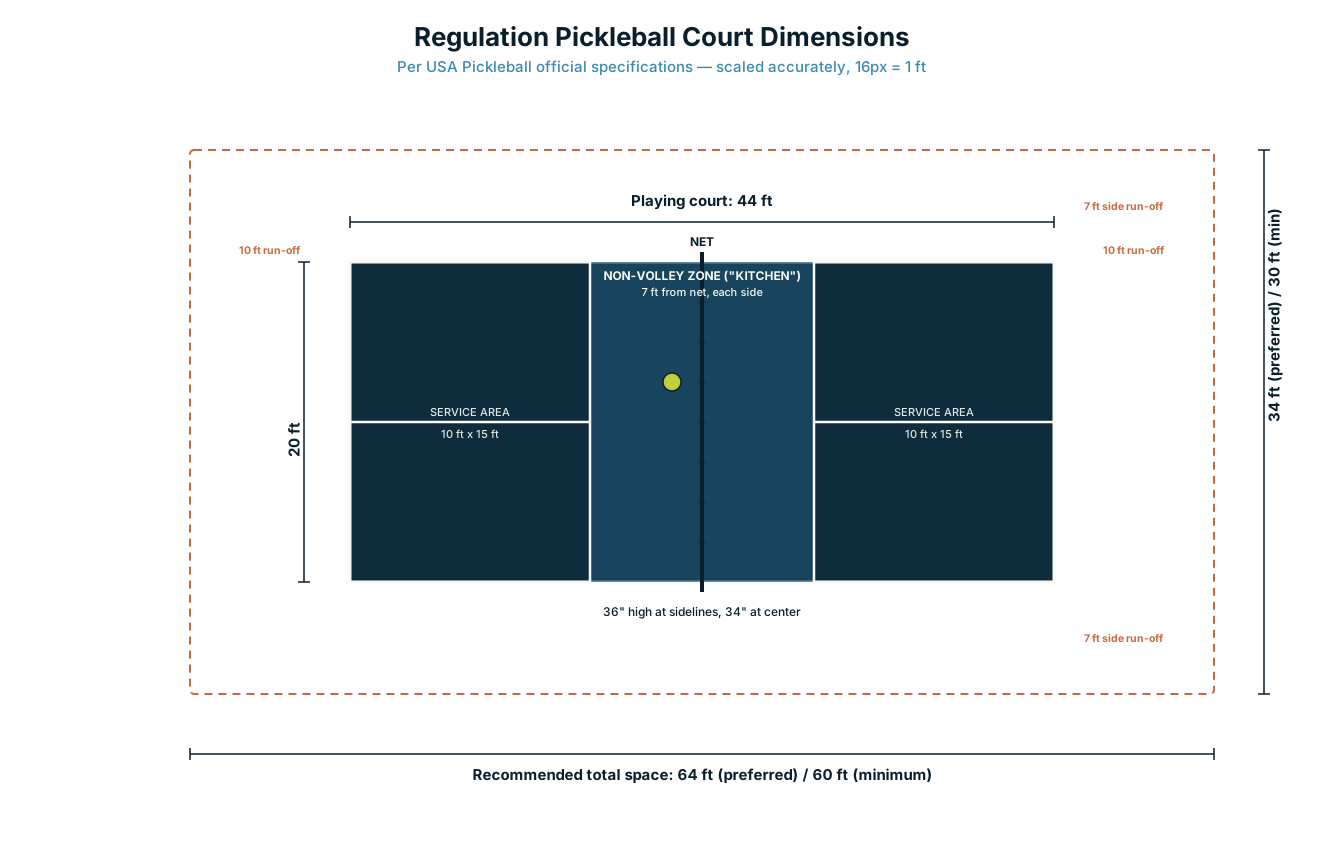
Drawn to scale from USA Pickleball's official specifications: 16 px = 1 ft.
The Playing Court: 20 ft × 44 ft
A regulation pickleball court measures 20 feet wide by 44 feet long, and unlike tennis, this size is identical for both singles and doubles play. There's no separate "doubles alley" to account for, which is part of what makes pickleball courts so much smaller and cheaper to build than a tennis court. The total playing surface works out to 880 square feet.
The court is divided by a centerline running from each baseline to the non-volley zone, splitting each half into two service areas, and by the non-volley zone itself, which spans the full 20-foot width of the court on both sides of the net.
The Non-Volley Zone ("The Kitchen"): 7 ft
The non-volley zone, almost universally called "the kitchen," extends 7 feet from the net on each side, spanning the full width of the court. Players cannot volley the ball (hit it out of the air without a bounce) while standing inside this zone, which is what gives pickleball its distinctive slower, more strategic pace near the net compared to a sport like tennis.
Service Areas: 10 ft × 15 ft
Each half of the court (outside the kitchen) is split by the centerline into two service areas, each measuring 10 feet wide by 15 feet long, four service areas total. This is simply the math of the court's geometry: each side of the net is 22 feet long (half of 44), minus the 7-foot kitchen leaves 15 feet, and the 20-foot width split by the centerline gives two 10-foot-wide lanes.
Net Height: 36" at the Sidelines, 34" at the Center
The net stands 36 inches high at the sidelines and 34 inches at the center, with posts set 22 feet apart (slightly wider than the court itself) and a minimum net length of 21 feet 9 inches post-to-post. That 2-inch dip in the middle is intentional. It gives players a slightly easier target down the center line, similar to tennis net specifications.
Recommended Total Space: 30' × 60' to 34' × 64'
The playing lines are only part of the story. USA Pickleball recommends a minimum total space of 30 by 60 feet and prefers 34 by 64 feet for any serious build. That extra run-off room (roughly 5–7 feet beyond each sideline and 8–10 feet beyond each baseline) gives players space to chase down lobs and wide shots without colliding with a fence. If you're planning a backyard court, budget for the larger footprint if your lot allows it; players notice the difference immediately, especially near the baselines.
Why These Numbers Matter Once You Start Building
Knowing the official dimensions is one thing; laying them out accurately on your own property is another. A few practical notes that don't show up in most rulebooks but matter a lot during construction: always measure and mark the non-volley zone lines before you set permanent net posts. Post placement is driven by the 22-foot post-to-post spec, not by eyeballing the sidelines, and getting it wrong by even a few inches will throw off every line on the court. Use a 3-4-5 triangle method (or a laser level with a right-angle attachment) to square your corners; a court that's a few degrees off-square is a common DIY mistake that's expensive to fix once concrete is poured.
If you're converting a driveway or an existing slab that's smaller than the full 20-by-44 footprint, you have two realistic options: scale everything down proportionally and treat it as a practice court (fine for drilling and casual play, but not regulation), or shift the court to use the largest rectangle your space actually allows and accept reduced run-off room on one or two sides. Either works for backyard play, just be upfront with anyone you invite over that it's not a tournament-spec layout.
Indoor Court Dimension Considerations
The court itself doesn't change indoors, but ceiling height does matter and is easy to overlook when repurposing a gym, barn, or warehouse. Most indoor facility guidance calls for a ceiling height of at least 18 feet above the playing surface, plus roughly 10 feet of clearance from walls beyond the court lines, to comfortably accommodate high lobs without balls constantly hitting rafters, lighting fixtures, or walls. If you're eyeing an existing structure for an indoor court, measure clearance before you measure floor space. A building with plenty of square footage but a low ceiling will limit play in ways that are hard to work around later. Once the space checks out, see our indoor flooring guide for surface options and cost.
Dimensions in Feet and Meters
| Measurement | Feet / Inches | Meters |
|---|---|---|
| Playing court | 20 ft × 44 ft | 6.10 m × 13.41 m |
| Non-volley zone (each side) | 7 ft | 2.13 m |
| Service area (each) | 10 ft × 15 ft | 3.05 m × 4.57 m |
| Net height (sidelines) | 36 in | 0.91 m |
| Net height (center) | 34 in | 0.86 m |
| Net length (min.) | 21 ft 9 in | 6.63 m |
| Total space (minimum) | 30 ft × 60 ft | 9.14 m × 18.29 m |
| Total space (preferred) | 34 ft × 64 ft | 10.36 m × 19.51 m |
Pickleball vs. Tennis vs. Badminton
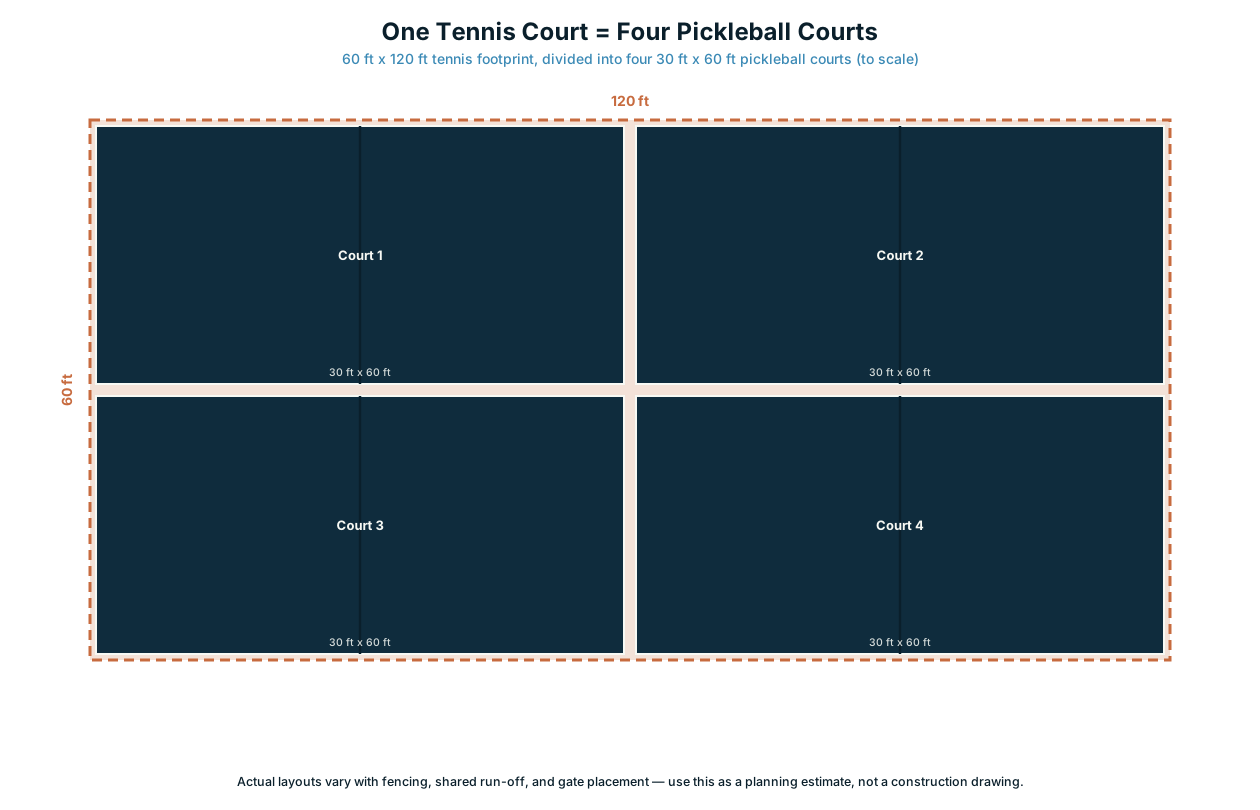
Here's a fact that surprises a lot of new players: a pickleball court is the exact same size as a badminton court, 20 by 44 feet, identical dimensions, right down to the foot. The playing area alone is less than a third the size of a tennis doubles court, and once you compare full recommended footprints (run-off included), a single tennis court has enough room for up to four pickleball courts.
| Sport | Playing area | Relative size |
|---|---|---|
| Pickleball | 20 ft × 44 ft (880 sq ft) | Baseline |
| Badminton | 20 ft × 44 ft (880 sq ft) | Identical |
| Tennis (doubles) | 36 ft × 78 ft (2,808 sq ft) | ~3.2× larger |
That size difference is exactly why so many facilities convert underused tennis courts into pickleball courts. A single tennis court's total footprint (about 60 by 120 feet including run-off) can fit up to four regulation pickleball courts. We cover the cost and layout of that conversion in the DIY vs. contractor guide, and the cost ranges specifically in our cost overview on the home page.
Quick Answers
How many square feet is a pickleball court?
The playing surface is 880 square feet (20 ft × 44 ft). Including the preferred 34-by-64-foot run-off footprint, the total space comes to 2,176 square feet.
Is a pickleball court the same size as a tennis court?
No. A pickleball court is significantly smaller. The playing area is roughly a third the size of a tennis doubles court, which is exactly why so many facilities fit multiple pickleball courts inside a single retired tennis court.
Do singles and doubles use different court sizes in pickleball?
No. Unlike tennis, pickleball uses the same 20-by-44-foot court and the same lines for both singles and doubles play. There's no separate doubles alley to add or remove.
How far apart are the net posts?
Net posts are set 22 feet apart, one foot beyond each sideline, with a net that's at least 21 feet 9 inches long post-to-post and no more than 3 inches in diameter.
Next Steps
Now that you know exactly how much space you need, the next question is what it'll cost to fill that space. Head to our materials and surfaces guide to compare surface options, or jump straight to the cost calculator to get a real number for your yard.